Fire insurance won’t pay out if your machinery simply fails on its own. Here’s what actually covers that gap, and why most factories need both.
By Keith Wong, FAR (BNM) · IFAR (BNM) · LFP (SC)
Table of Contents
Quick Answer: Machinery breakdown insurance Malaysia factories need covers sudden and unforeseen mechanical or electrical failure of machinery during normal operation — a motor burning out, a bearing seizing, an electrical fault frying a control panel. Fire insurance specifically excludes this kind of internal failure, since it only responds to fire, lightning, and explosion. If a machine simply breaks down on its own, with no fire involved, a standard fire policy pays nothing — which is exactly the gap machinery breakdown cover exists to fill.
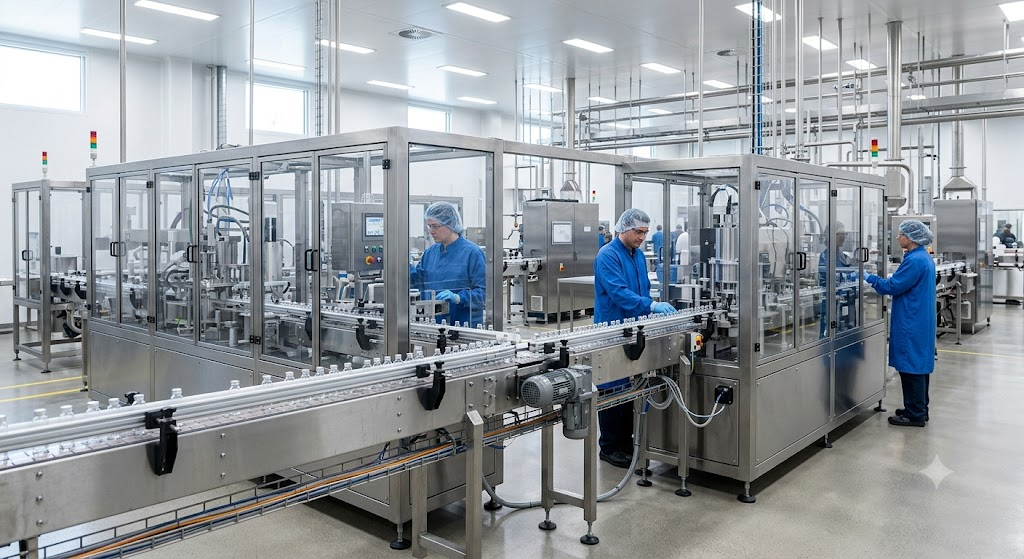
Why Fire Insurance Doesn’t Cover This
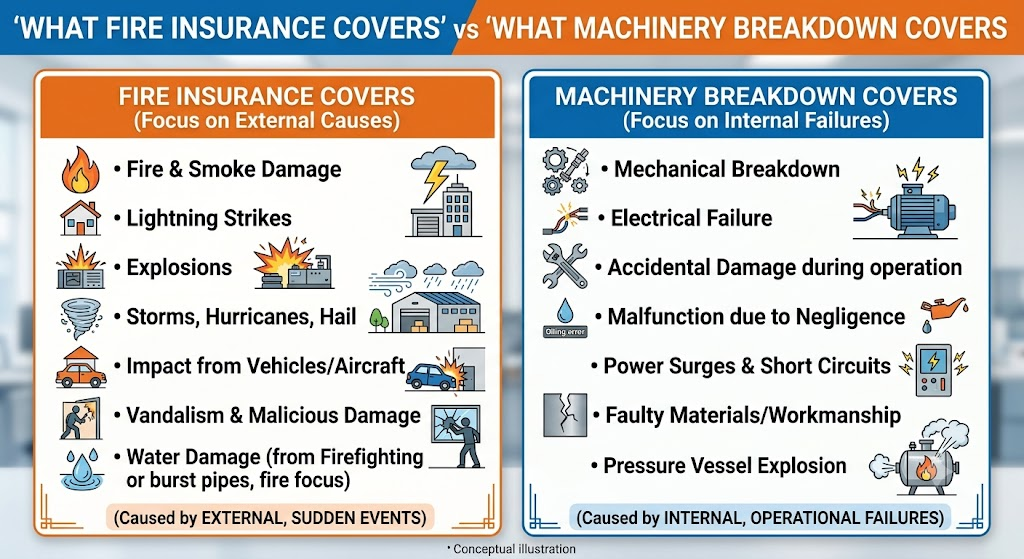
A standard Fire Insurance or Industrial All Risks policy is built around external, sudden events — fire, lightning, explosion, and (depending on extensions) flood or windstorm. What it’s not built for is a machine failing on its own, from causes entirely internal to the equipment: metal fatigue, a lubrication failure, an electrical short circuit, or a manufacturing defect that finally gives out after years of normal use. None of that involves fire, so none of it triggers a fire policy.
This distinction catches a lot of factory owners off guard. They assume “we’re covered” because they have a fire policy in place, and only discover the gap when a critical piece of machinery fails, production stops, and the claim gets rejected — not because the insurer is being difficult, but because the policy genuinely was never designed to cover that cause of loss. Machinery breakdown insurance Malaysia manufacturers rely on exists precisely to close that gap.
What Machinery Breakdown Insurance Actually Covers
Machinery breakdown insurance (MB) responds specifically to sudden and unforeseen physical damage to insured machinery from causes like electrical short circuit, mechanical breakage, centrifugal force, faulty lubrication, or defects in casting or material. It typically covers the cost of repair or replacement of the damaged machinery, and can extend to associated costs like dismantling and re-erection.
What it generally doesn’t cover: gradual wear and tear, corrosion, normal deterioration from age, or damage from causes already covered elsewhere (like fire or flood, which stay with the property policy). MB is specifically about the sudden, unexpected mechanical or electrical failure — not the slow decline every machine eventually goes through.
The Business Interruption Gap Most Factories Miss
Repairing or replacing broken machinery is only part of the cost. While that machine is down, production often stops or slows, and the business keeps incurring fixed costs — rent, salaries, loan repayments — without the revenue to match. Machinery Loss of Profits (MLOP), usually bought as an extension alongside MB, covers that income gap specifically following an insured machinery breakdown.
This is the extension most commonly skipped, usually because it’s treated as optional rather than essential. In practice, for many factories the lost income from downtime ends up costing more than the repair itself — making MLOP arguably the more financially significant half of the cover, not an add-on afterthought.
Do You Need Both Fire Insurance and Machinery Breakdown?
For most factories and manufacturing operations, yes. They cover genuinely different causes of loss, and one doesn’t substitute for the other. A factory with only fire insurance is protected against fire, lightning, and explosion, but fully exposed if a critical machine simply fails from internal causes — which, for equipment-heavy operations, is often the more statistically likely event of the two.
The decision isn’t really “fire insurance or machinery breakdown” — it’s whether the specific machinery in your operation is valuable or critical enough that its failure would meaningfully disrupt the business. For a single low-value piece of equipment that’s easily and cheaply replaced, the cover may not be worth it. For the core production line a factory depends on, it usually is.
How Machinery Breakdown Insurance Malaysia Sum Insured Is Calculated
Sum insured for MB is typically based on the replacement value of the machinery — what it would cost to replace it new, not its current depreciated book value. Under-insuring based on an old purchase price or a depreciated accounting value is a common mistake, and like most property covers, MB policies often carry an average (co-insurance) clause that proportionately reduces a claim payout if the sum insured turns out to be too low relative to actual replacement cost.
Frequently Asked Questions
Does fire insurance cover machinery breakdown in Malaysia?
No. Fire insurance responds to fire, lightning, and explosion. Machinery breaking down from internal mechanical or electrical causes, with no fire involved, isn’t covered under a standard fire policy — that’s specifically what machinery breakdown insurance covers instead.
What’s the difference between machinery breakdown and machinery loss of profits?
Machinery breakdown (MB) covers the cost of repairing or replacing the damaged machinery itself. Machinery loss of profits (MLOP), usually bought as an extension, covers the lost income while that machinery is out of action following an insured breakdown.
Does machinery breakdown insurance cover normal wear and tear?
No. It covers sudden and unforeseen breakdown from causes like electrical short circuit or mechanical failure, not gradual deterioration, corrosion, or wear and tear from normal ageing — that kind of gradual decline generally isn’t insurable under any policy.
How is the sum insured calculated for machinery breakdown cover?
Sum insured is typically based on the full replacement value of the machinery — what it would cost to replace new — not its depreciated book value. Under-insuring against replacement cost is a common and costly mistake at claim time.
Not sure if your factory’s fire policy actually covers machinery failure?
WhatsApp Keith Wong at +6016-336 9321 for a quick review of what your current policy actually covers, and where the gaps are.
Disclaimer: This article is for general informational purposes only and does not constitute insurance or financial advice. Policy coverage, exclusions, and sum insured requirements vary by insurer and by individual policy wording. Please consult your appointed Financial Adviser’s Representative or insurer directly for guidance specific to your situation.