By Keith Wong, FAR (BNM) · IFAR (BNM) · LFP (SC)
A round-number guess undersells the real risk. Here’s how to size coverage against what the key person actually contributes.
Table of Contents
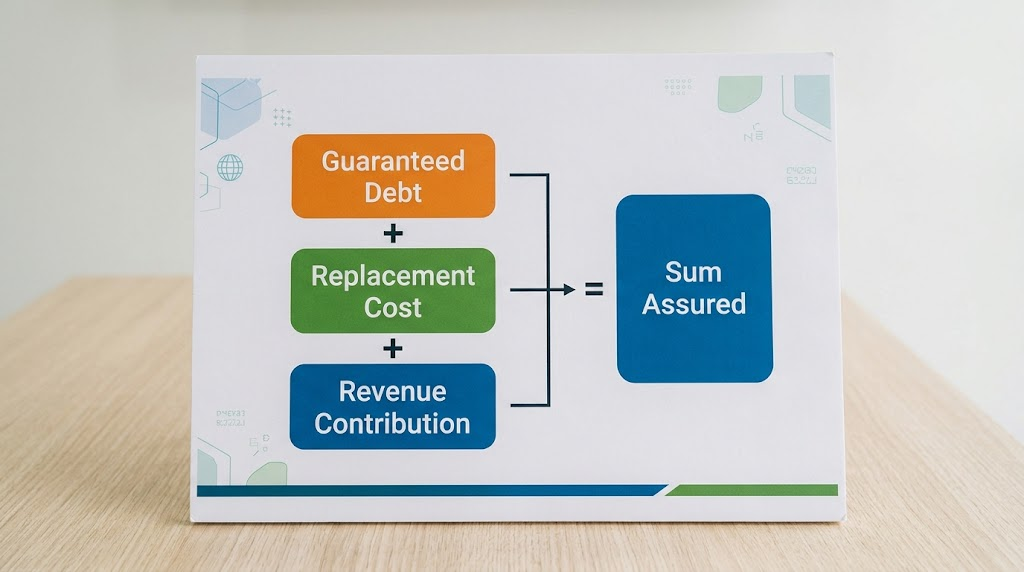
Quick Answer: Keyman life insurance corporate Malaysia companies buy is usually sized by picking a round number — RM1 million, RM2 million — rather than by calculating what losing that person would actually cost. A more defensible sizing method adds together the key person’s direct revenue or profit contribution, the realistic cost of finding and training a replacement, and any business debt they’ve personally guaranteed. That total, not a round guess, is what the sum assured should reflect.

Keyman life insurance corporate Malaysia SMEs and larger companies both rely on tends to get bought the same way regardless of company size: someone picks a number that sounds substantial, applies for that sum assured, and moves on. It’s a reasonable starting instinct — better a rough policy than none — but it usually means the company is either badly under-covered against the real financial impact of losing that person, or paying premiums on cover well beyond what’s actually needed.
Why the Round-Number Approach Falls Short
A company’s key person is rarely valuable in a single, easily quantified way. A founder who holds the client relationships, a technical director who’s the only one who understands the core product, or a sales lead who personally closes most of the pipeline — each represents a different kind of loss if they’re suddenly gone, and none of it is captured by picking a number that feels big enough. The purpose of keyman insurance is to buy the company time and runway to find a replacement or restructure operations without a cash crisis forcing bad decisions during an already difficult period. Sizing it properly means working backward from what that runway actually costs.
A Practical Sizing Framework
1. Direct revenue or profit contribution
Start with what the key person directly generates or protects — their share of revenue if they’re client-facing, or an estimate of the profit contribution attributable to their role if it’s less directly measurable. For a sales-driven key person, this might be a multiple of their trailing 12-month closed revenue. For a technical founder, it might be the proportion of overall revenue that depends on the product or systems only they fully understand.
2. Cost of finding and training a replacement
Add recruitment costs, the likely gap between the departure and a replacement being productive, and the ramp-up period where a new hire is being trained but not yet contributing at full capacity. For senior or highly specialised roles in Malaysia, this realistically runs from several months to well over a year before someone is operating at the departed person’s level.
3. Personally-guaranteed business debt
Where the key person has personally guaranteed a business loan, overdraft, or trade facility, that exposure sits separately from operational disruption and should be added on top — losing the person shouldn’t also trigger a debt crisis if the guarantee terms are affected by their death or incapacity.
Tax Treatment: What Makes the Premium Deductible
Malaysia’s Inland Revenue Board sets out the conditions for keyman insurance premium deductibility in Public Ruling No. 2/2003. Broadly, three conditions need to hold: the policy is on the life of a key person whose loss would reduce the company’s profits; the company is the policy owner and beneficiary, with proceeds remaining with the company rather than passing to the individual or their family; and the insured key person is not a shareholder of the company. Term life or accident policies with no investment element qualify for premium deductibility as a business expense — whole life or investment-linked policies are treated differently, since the investment component changes how the premium and proceeds are taxed.
Getting this structure wrong is a common and expensive mistake — LHDN regularly disallows deductions where there’s a personal benefit element, an investment component, or where the insured person turns out to hold shares in the company. It’s worth confirming the structure with your adviser and accountant before assuming the premium qualifies as deductible.
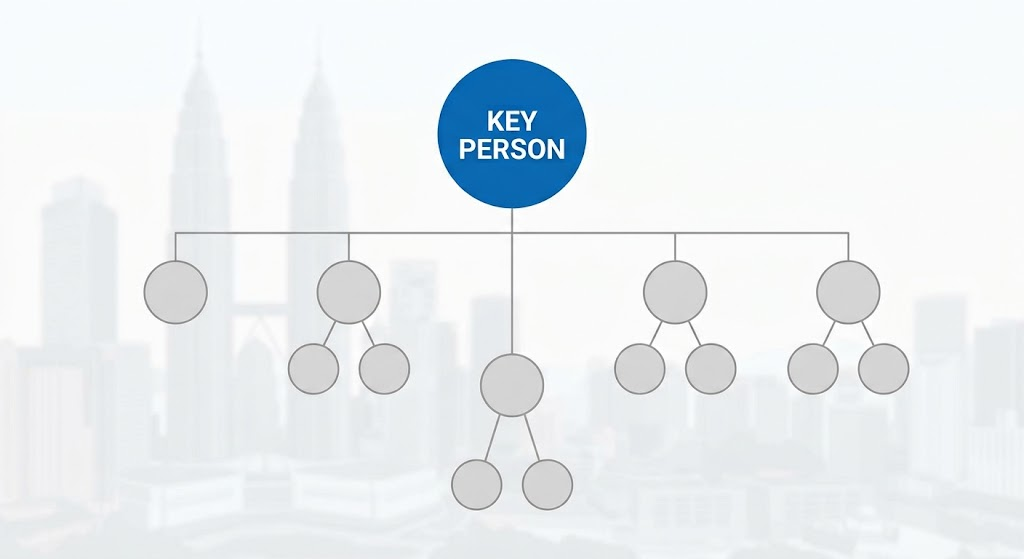
Who Actually Counts as a Key Person
- Founders and major shareholders whose personal relationships or expertise the business depends on disproportionately
- Technical leads or product owners where institutional knowledge sits with one or two people rather than being documented or distributed
- Top sales performers who personally hold a large share of client relationships or pipeline
- Anyone who has personally guaranteed significant business financing
Frequently Asked Questions
Can keyman insurance be taken on a shareholder or director?
It can be taken on a director, but if that person is also a shareholder, the premium generally won’t qualify for tax deduction under LHDN’s Public Ruling 2/2003. Non-shareholder directors and key employees are the more straightforward case for deductibility.
How often should keyman coverage be reviewed?
At least annually, or whenever the company’s revenue, headcount, or debt structure changes materially. A sum assured sized correctly three years ago on last year’s revenue and today’s guaranteed debt may already be significantly out of date.
Are keyman insurance proceeds taxable when the company receives them?
Generally yes, where the premiums were previously claimed as a tax-deductible expense — the proceeds are then treated as taxable business income when received. This trade-off is part of why the sizing and structuring decision matters, not just the headline sum assured.
Does keyman insurance replace the need for a succession or continuity plan?
No. It provides the cash runway to execute a continuity plan, but doesn’t replace having one. Insurance without a plan for who takes over and how still leaves the business scrambling during the payout period.
Get Your Keyman Coverage Sized Properly
If you want help working through the actual numbers for your business — revenue contribution, replacement cost, and guaranteed debt — message me on WhatsApp at +6016-336 9321. I work across a multi-provider panel, so the structure isn’t limited to one insurer’s standard template.
Disclaimer: This article is for general information only and does not constitute financial, legal, tax, or insurance advice. Keyman insurance sizing, tax deductibility, and proceeds taxability depend on individual company circumstances and current LHDN rulings — always confirm with a licensed adviser and your tax accountant before implementation. Keith Wong is a Financial Adviser’s Representative (FAR) and Islamic Financial Adviser’s Representative (IFAR) licensed under Bank Negara Malaysia, and a Licensed Financial Planner (LFP) under the Securities Commission Malaysia. Full credential details are available on the disclaimer page of this website.